









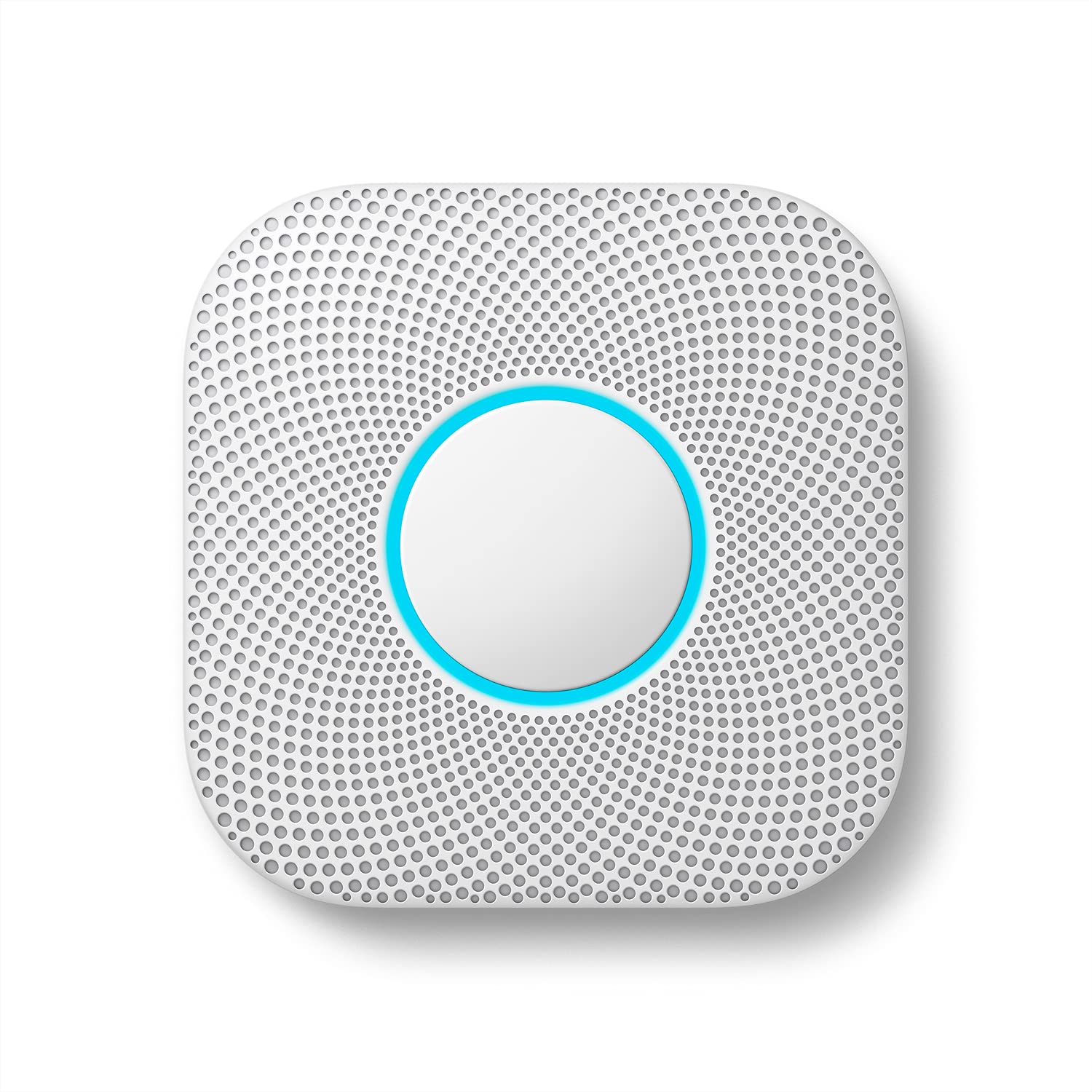
Last night I did something extremely reckless: I turned off my lights before bed.
Apparently this is the moment Google has decided is the perfect opportunity to remind me that my Nest hardware is old and I should really think about replacing it. Not a security patch notice. Not a “hey, your device needs attention.” A nudge, wedged into the most mundane possible interaction, that reads less like a system message and more like a salesperson who’s cornered you at the door on your way out.
I didn’t ask “how’s my hardware doing.” I asked the lights to turn off. And somewhere between tapping the switch and the lights actually going dark, Google decided that was the moment to sell me something.
The hardware isn’t broken. It’s just old.
Here’s the part that actually bothers me, more than the nag itself: the hardware works fine. It’s not glitching, it’s not failing to respond, it’s not dying. It does exactly what it was built to do. The “problem” isn’t a problem in any functional sense — it’s a business decision, dressed up as a helpful suggestion, to get me to throw away working electronics and buy new ones.
If a thermostat is measuring temperature correctly and turning the furnace on and off correctly, it is, definitionally, working. Same with a smoke detector reading smoke levels correctly, or a light switch switching lights. Nest isn’t nagging me because my house is unsafe or my automations are broken. It’s nagging me because a device on a shelf somewhere isn’t generating revenue anymore, and the easiest way to fix that is to make the current owner feel like they’re behind.
The actual fix here is embarrassingly simple: sell the sensors separately
This is the part that turns mild annoyance into genuine frustration, because the solution is so obvious it’s hard to believe nobody at Google pitched it and won. In the overwhelming majority of these “aging device” situations, the thing that’s actually degrading — if anything is degrading at all — is a $2-3 sensor component. Not the housing. Not the wireless radio. Not the mounting hardware. Not the app integration. A sensor.
Google, or any smart home company running this playbook, could sell a sensor replacement kit: pop the old sensor module out, snap a new one in, done. Keep the housing, the base, the wiring, the mounting plate — the parts that are perfectly fine and, more importantly, are the parts that are annoying and time-consuming to install in the first place. Instead, the model is “replace the entire unit,” which means:
- A perfectly good plastic housing goes in a landfill
- A perfectly good base and backplate goes in a landfill
- Wiring harnesses, mounting screws, trim plates — landfill
- The only part that might have actually needed replacing was a fraction of the total material being thrown away
This is not a hard engineering problem. Modular sensor replacement is a solved concept in plenty of other product categories. It’s a business choice not to do it, because “buy the whole new thing” is a better sales number than “buy the $8 part that fixes it.”
This is an e-waste problem, not a UX problem
It’s worth being blunt about the scale here. Smart home devices are not small, simple electronics — they’re a mix of plastics, circuit boards, batteries or capacitors, wireless radios, and in Nest’s case, actual HVAC-connected relays and smoke-sensing hardware. Every unit that gets tossed because of a software nudge rather than an actual failure is:
- Rare earth elements and mined materials thrown away for no functional reason
- Manufacturing energy and carbon cost, spent twice — once for the “obsolete” unit, again for its replacement
- E-waste that, depending on your municipality, may or may not even be recycled properly, because smart home devices with embedded batteries and boards are genuinely annoying to recycle correctly
Multiply this across however many millions of Nest thermostats, smoke detectors, and cameras are quietly nudging their owners toward replacement purchases, and you’ve got a meaningful environmental footprint that exists purely because “encourage upgrade purchases” was a product decision, not because the hardware failed.
Maybe the smart smoke alarm was the mistake
Here’s the thing I keep coming back to: a “dumb” smoke alarm — the $20 kind with a 9-volt battery and a test button — does not nag you. It does not have an app that reminds you it’s aging. It does not interrupt an unrelated task to suggest you buy its successor. It just sits there, quietly doing the one job it has, for a decade, and then you get a low-battery chirp and swap a battery.
I like smart home tech — genuinely, I’ve got a whole ecosystem running across Alexa, Matter/Thread, and Hue, and most of it earns its keep. But there’s a real argument forming here that the “smart” part of some of these devices is providing more friction than benefit. A smoke detector doesn’t need a companion app strategy. It needs to detect smoke and make a loud noise when it does. Everything past that is optional at best, and at worst, it’s a vector for the exact kind of nagware I ran into over something as trivial as turning off my bedroom lights.
Next time a device in this category needs replacing in my house, I’m seriously considering just buying the stupid, boring, non-connected version. It won’t judge my bedtime routine. It won’t remind me it’s getting older. It’ll just work — the way the “obsolete” hardware I already own is still doing right now, whether Google wants to admit that or not.