






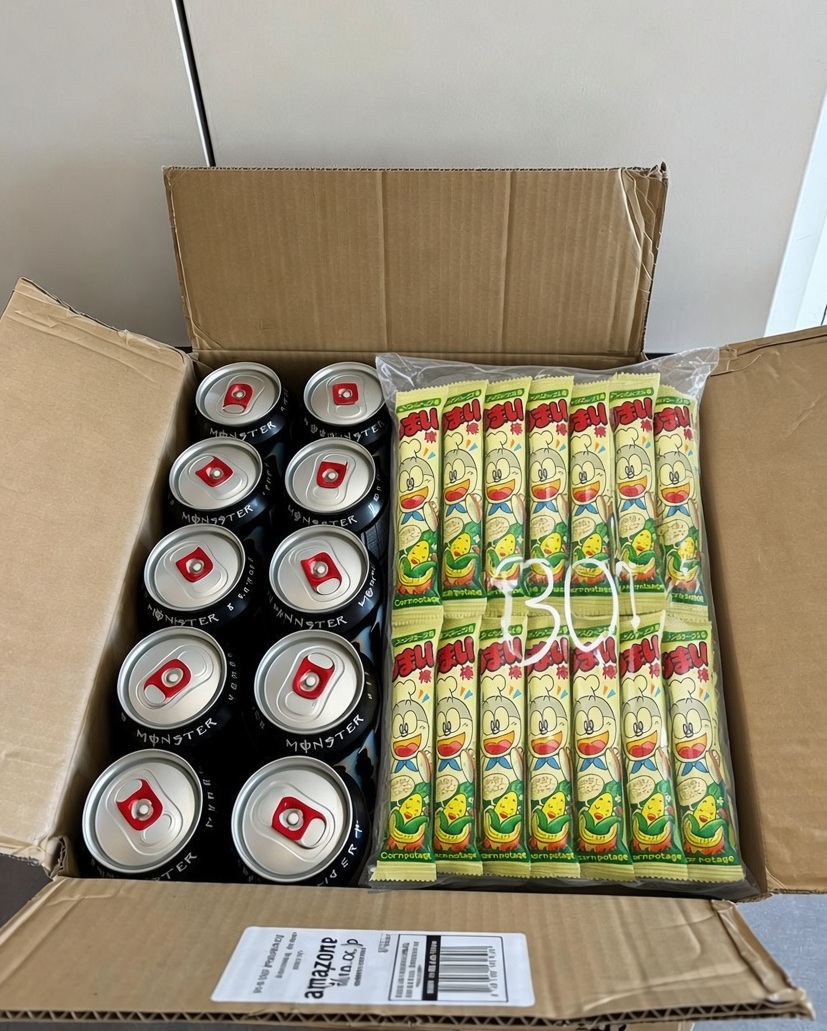
There’s a particular kind of disappointment reserved for opening a box you’ve been looking forward to and finding wreckage inside. Not because anything was stolen or lost in transit — but because whoever (or whatever) packed it made a decision that, to any human standing in a warehouse aisle, would have taken about two seconds to override.
The Crushed Snack Problem
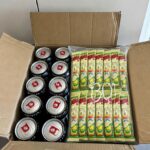
I recently ordered a couple of 15-packs of Monster Energy alongside a shipment of umaibo — the light, airy Japanese corn snacks that are, structurally speaking, somewhere between a Cheeto and a soap bubble. Amazon’s fulfillment system decided these belonged in the same box.
You can guess what happened. Two cases of canned energy drinks, each can solid and heavy, shifted around in transit on top of snacks that have all the structural integrity of a dry cracker. What arrived wasn’t “slightly crushed.” It was powder. The umaibo didn’t survive as a shape you could photograph, let alone eat.
Target’s Version: Cat Litter and Doritos
Target’s warehouse logic apparently isn’t much different. A reader (or in this case, me) recently received a bag of Doritos shipped in the same box as a container of cat litter. Setting aside the crushing risk for a second — think about what shares a box with kitty litter for two to five days in transit. Litter is porous, often scented or lightly dusty, and packed in bags or jugs that aren’t exactly sealed like a hazmat container. Chips are an open, breathable bag designed to let you smell them the second you tear it open. This isn’t just a “will it get crushed” issue. It’s a “would you want to eat this afterward” issue.
The Real Issue: These Aren’t Random Mistakes
It would be one thing if this happened occasionally, the result of a rushed employee grabbing whatever box was closest. But the pattern — heavy, rigid items boxed with fragile snacks; food packed with non-food items that have strong odors or contamination potential — points to something more structural: the packing decisions are being made by automated systems optimizing for box count, shipping cost, and warehouse efficiency, not for what’s actually inside the box.
These systems are very good at answering “what’s the fewest boxes we can use to ship these items together?” They are seemingly not asking “does this combination make sense?” A system that just sees SKU dimensions and weight has no concept of “crushable,” “porous,” “food,” or “please don’t put my snacks next to a jug of clay dust.” It sees volume to fill and boxes to fill it with.
Why This Matters Beyond Annoyance
This isn’t just about a bag of ruined corn puffs. A few things are actually worth pointing out here:
- Food safety optics matter. Even if cat litter and a sealed Doritos bag never touch, a customer opening that box has every right to be unsettled. Trust in what you’re about to eat starts before you rip open the bag.
- Waste adds up. Crushed snacks usually get thrown out, not eaten. That’s real food, real packaging, and real shipping fuel spent for a product that ends up in the trash.
- It reflects a bigger blind spot in automation. Warehouse packing algorithms are a small, low-stakes example of a much bigger problem: automating decisions without giving the system enough context to know what actually matters to the human on the other end.
What Would Actually Fix It
None of this requires cutting-edge AI. It requires fairly basic packing rules that many warehouses already have and simply aren’t enforcing consistently:
- Fragility tagging at the SKU level — snack foods, chips, and anything airy or brittle should be flagged as “do not pack with rigid/heavy items.”
- Category separation rules — food items simply shouldn’t be boxed with household chemicals, litter, or strongly scented non-food products, full stop, regardless of whether they fit efficiently together.
- Weight-differential checks — if one item in a shared box is several times heavier or denser than another, that alone should trigger a repack or extra dunnage.
- Human spot-checks on flagged combinations — even a lightweight review step before an odd pairing ships would catch cases like these before they go out the door.
The Bottom Line
Amazon and Target both have enormously sophisticated logistics operations — the kind that can get a package to your door in a day. It’s a little absurd that the same systems can’t reliably keep a bag of chips away from cat litter, or protect a $3 snack from a $30 case of energy drinks sharing its box. The technology to fix this isn’t the hard part. Building in the judgment that a person packing your groceries by hand would have used instinctively — that’s the part these systems still haven’t caught up to.
Until they do, the safest bet is checking your orders before checkout: if you’re buying something crushable, consider splitting it into its own order, or at least bracing yourself for the crumbs.