





Last year I wrote about how absurd it was that Minecraft Bedrock had no native Apple Silicon build. I’m writing basically the same post again, because nothing has changed. If anything, it’s gotten a little worse.
Where things actually stand in 2026
A quick refresher on the shape of the problem, since it hasn’t moved:
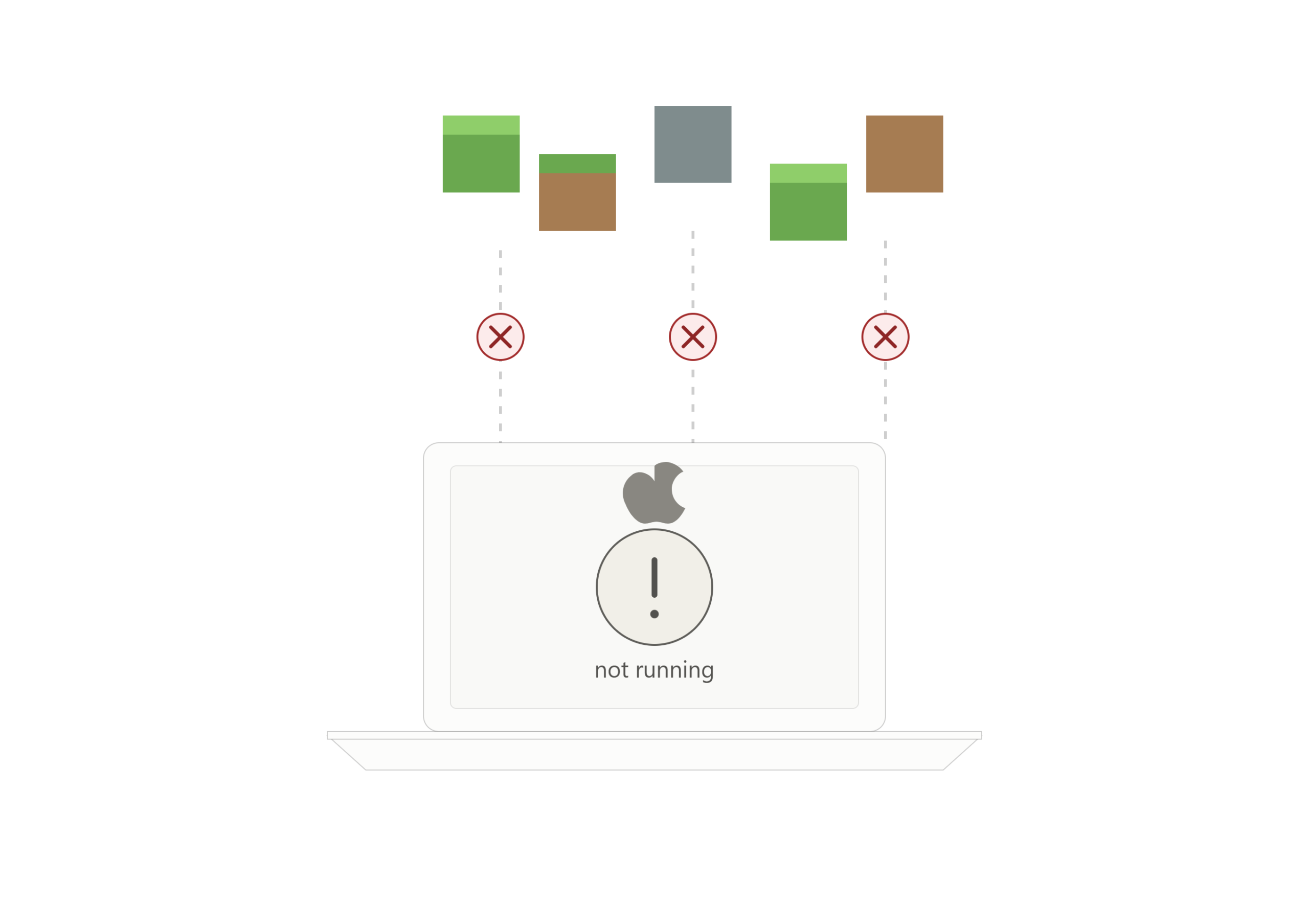
- There is still no native Bedrock build for Apple Silicon Macs. M1 shipped in November 2020. We are now closing in on six years of M-series Macs, and Bedrock has never once run natively on any of them.
- The old Intel-era macOS Bedrock port isn’t just neglected — it’s actively dead. It stopped receiving updates after March 2025, when Mojang made OpenGL ES 3.1 a requirement and the old launcher only supports ES 3.0. It still technically launches, but it’s frozen on an old version and can’t join current-version friends or servers.
- The workarounds are the same workarounds. Boot Camp is gone (Apple killed it at the architecture switch), so Apple Silicon owners are stuck choosing between a Windows VM (Parallels being the least painful option), sideloading the Android/Google Play build through a third-party launcher, or just playing Java Edition instead — which, to be fair, has run natively on Apple Silicon for years.
- The single most maddening part hasn’t changed either: the technical excuse doesn’t exist. The iPadOS build of Bedrock already runs on the exact same chip family, already supports keyboard and mouse input, and already runs at full performance in Apple’s app sandboxing model on Mac via Apple Silicon’s native iPad-app compatibility. Someone would need to flip on Mac Catalyst-style distribution or do a relatively small recompile — not build a new engine port from scratch.
The community hasn’t given up asking
What’s actually new this year isn’t progress — it’s more people arriving at the same conclusion I did. There’s an active feedback thread on Mojang’s own feedback site making almost exactly the argument above: that the iOS version is Mac-ready today, keyboard and mouse support included, and that withholding it is a pure business decision, not a technical one. It reads like a rerun of the M1-launch-era threads from 2020 and 2021, except now it has six years of receipts behind it instead of speculation.
Why this keeps not happening
The likely explanation hasn’t changed since last year either, and it probably comes down to some mix of:
- Low priority. Mac is a rounding error next to mobile, console, and Windows for Bedrock’s install base, so there’s no revenue case urgent enough to greenlight the engineering time.
- Organizational friction. Bedrock is a C++ engine shared across a dozen platforms; Java Edition’s JVM portability made Apple Silicon support almost free by comparison, which is exactly why Java got there first and Bedrock didn’t.
- No external pressure. Nobody at Microsoft loses anything by leaving this unresolved. The people affected can already limp along with Java, a VM, or a sideloaded APK, so the squeaky wheel never gets loud enough.
The state of the workarounds, for anyone stuck here
If you’re an Apple Silicon Mac owner who actually needs Bedrock today (crossplay with Switch/console/mobile friends, or a Realm that’s Bedrock-only), the practical options in mid-2026 are still:
- Parallels Desktop + Windows — most reliable, costs money, eats disk space and battery.
- A sideloaded Android build via a third-party launcher, using a Bedrock copy purchased through Google Play — free-ish, but fiddly, and living in “System Settings → Open Anyway” purgatory forever.
- Give up and play Java Edition, which has run natively since 1.19 and just quietly works, minus crossplay with console/mobile friends.
None of these are new. They’re the same three options I wrote about a year ago, just with slightly different launcher names.
So, same conclusion as last time
The technical case for native Bedrock on Apple Silicon was strong in 2020, airtight by 2022, and at this point it’s just sitting there. Nothing about the last twelve months suggests Microsoft is planning to change course — no roadmap mention, no beta, no statement. Ask me again next year and I suspect I’ll be updating the “years since M1 launched” counter and not much else.